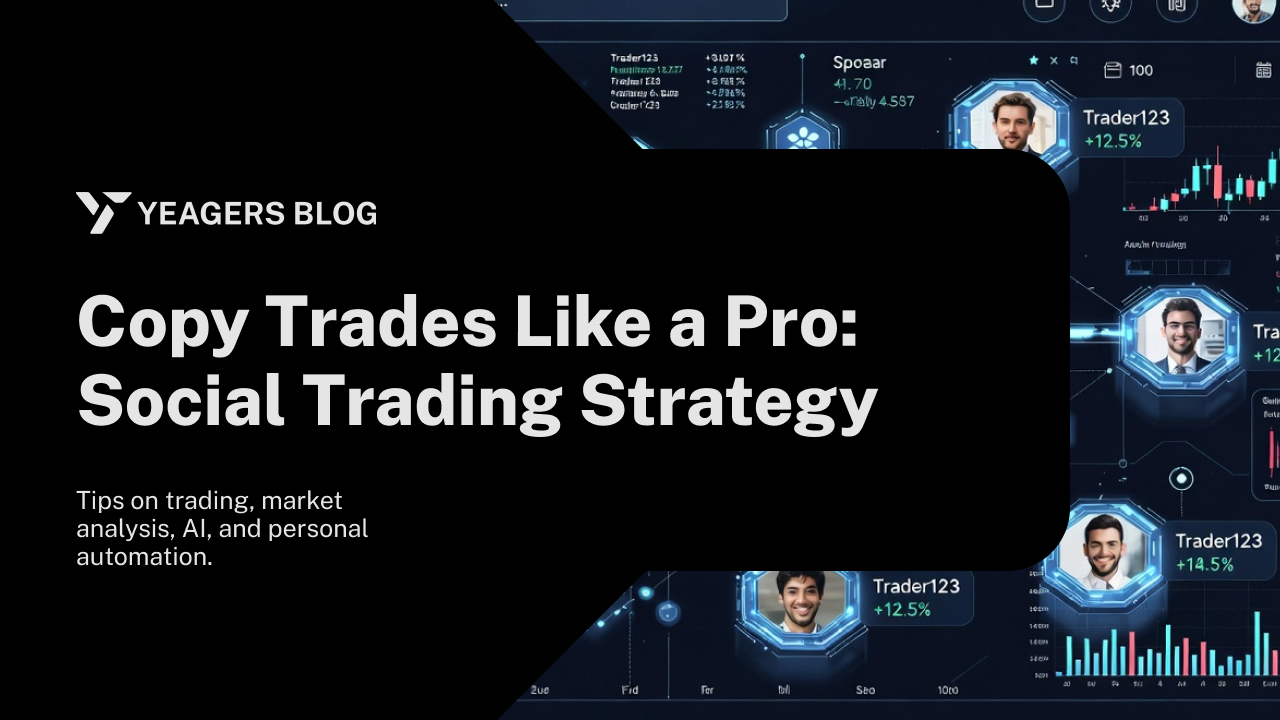
Copy Trades like a pro: Social trading strategy
"Social trading empowers individuals to harness collective intelligence, transforming the learning curve into a collaborative journey. According to eToro, it democratizes access to sophisticated strategies, allowing even novice traders to potentially replicate the success of seasoned professionals, provided they apply diligent research and proper risk management."
In the dynamic world of financial markets, the concept of "social trading" has revolutionized how individuals approach investing. No longer is trading an isolated pursuit; it has evolved into a collaborative ecosystem where insights and strategies are shared, debated, and even replicated. Copy trading, a core component of social trading, allows users to automatically mirror the trades of experienced investors, often referred to as "master traders" or "signal providers." While the allure of simply copying successful strategies is undeniable, truly succeeding "like a pro" requires more than just a click of a button. It demands a strategic approach, thorough due diligence, and robust risk management. This comprehensive guide will delve into the intricacies of social trading, equipping you with the knowledge and tools to navigate this exciting landscape with expertise and confidence.
1. Understanding social trading
Social trading platforms merge elements of social networking with financial trading. They allow users to connect with other traders, share insights, discuss market trends, and most importantly, observe and copy the trading activities of top-performing investors. This creates a transparent environment where performance data, trading styles, and risk appetites are openly displayed.
- Copy Trading: This is the most direct application of social trading. When you engage in copy trading, your account is linked to a chosen master trader's account, and every trade they open or close is automatically replicated in your portfolio, proportional to your allocated investment. It's an automated process designed to help you benefit from the expertise of others without having to execute each trade yourself.
- Mirror Trading: While often used interchangeably with copy trading, mirror trading usually refers to replicating entire strategies or algorithmic systems rather than individual trades. It can be more hands-off, focusing on a broader portfolio approach.
- Signal Providers: Some platforms offer signal services where master traders provide trade alerts or recommendations that users can then choose to execute manually. This offers more control but less automation than direct copy trading.
2. Benefits of social trading
The popularity of social trading stems from several compelling advantages it offers to both novice and experienced traders.
- Accessibility: Social trading platforms significantly lower the barrier to entry for financial markets. Beginners can gain exposure to diverse strategies without needing extensive prior knowledge or experience.
- Learning Opportunity: By observing and analyzing the decisions of successful traders, users can learn about different market analysis techniques, risk management practices, and trading psychology.
- Time Efficiency: For those with busy schedules, copy trading offers a solution to participate in financial markets without dedicating hours to research and trade execution.
- Portfolio Diversification: Copying multiple traders with different strategies (e.g., long-term, short-term, various asset classes) can help diversify your portfolio and potentially reduce overall risk.
- Transparency: Most platforms provide detailed statistics and historical performance data for master traders, allowing for informed decision-making.
3. Key considerations before copying trades
To copy trades like a pro, you must move beyond superficial metrics and delve into a deeper analysis of potential master traders.
- Risk Tolerance Alignment: Your chosen master trader's risk profile must align with your own. Some traders employ high-risk, high-reward strategies, while others prefer a more conservative approach. Understand their average drawdown, leverage usage, and the volatility of their assets.
- Historical Performance: Look beyond short-term gains. Analyze consistent profitability over a significant period (at least 6-12 months). Scrutinize monthly returns, maximum drawdown, and recovery rates after losses. A trader who consistently performs well through various market conditions is generally more reliable.
- Trading Strategy: Understand the master trader's underlying strategy. Are they scalping, day trading, swing trading, or long-term investing? Do they focus on specific markets (forex, stocks, crypto)? A clear understanding helps you assess if their strategy is sustainable and fits your investment goals.
- Trade Volume and Frequency: Consider how often the master trader trades. Very high frequency might lead to higher commission costs, while very low frequency might mean slower capital growth.
- Average Trade Duration: Short-term trades (minutes to hours) typically involve higher risk and volatility, while longer-term trades (days to weeks) might be more stable but tie up capital for longer.
- Number of Followers and Assets Under Management (AUM): While not definitive, a significant number of followers and substantial AUM can indicate a trader's popularity and perceived trustworthiness, though it's not a guarantee of future performance.
- Communication and Engagement: Some master traders actively communicate with their followers, explaining their decisions. This can be a valuable learning tool and a sign of transparency.
4. Steps to implement a social trading strategy
Implementing a robust social trading strategy involves a structured approach, from platform selection to continuous monitoring.
1. Choose a Reputable Social Trading Platform: Research and select a platform known for its security, regulatory compliance, user-friendly interface, diverse selection of master traders, and competitive fees. Popular choices include eToro, ZuluTrade, and DupliTrade, each with unique features and market focuses.
2. Define Your Investment Goals and Risk Profile: Before you even look at traders, determine how much you're willing to invest, your profit expectations, and the maximum loss you're comfortable with. This will guide your selection process.
3. Conduct Thorough Due Diligence on Master Traders: This is the most crucial step. Use the considerations outlined in the previous section. Filter traders by risk score, historical performance, asset class, and strategy. Don't be swayed by isolated high-profit months; look for consistency.
4. Diversify Your Copied Portfolio: Instead of putting all your capital into one master trader, spread your investment across several traders with different strategies and risk profiles. This mitigates the risk associated with any single trader underperforming.
5. Allocate Capital Strategically: Decide how much capital you want to allocate to each chosen master trader. Most platforms allow you to specify the amount, and trades will be copied proportionally. Start with smaller amounts until you gain confidence.
6. Implement Risk Management Tools: Utilize features like stop-loss orders on your copied trades or setting a maximum drawdown limit for your overall copy trading portfolio. This ensures you don't lose more than you can afford.
5. Risks and how to mitigate them
While social trading offers numerous advantages, it's not without its risks. A professional approach involves acknowledging and proactively mitigating these potential pitfalls.
- Past Performance Does Not Guarantee Future Results: This is the golden rule of investing. A master trader's stellar past performance is not a guarantee they will continue to be profitable. Market conditions change, and even the best traders can experience losing streaks.
- Market Volatility: Financial markets are inherently volatile. Unexpected events can cause rapid price swings, leading to losses even for well-managed strategies.
- Over-Leverage: Some master traders use high leverage to amplify returns, which also amplifies potential losses. Ensure your risk settings on the platform can restrict excessive leverage on your copied trades.
- Platform and Technical Risks: Glitches, server issues, or internet connectivity problems can affect trade execution, leading to missed opportunities or unintended losses. Choose platforms with robust infrastructure.
- Emotional Trading: Even though it's automated, the temptation to stop copying a trader during a drawdown or to increase investment during a hot streak can lead to poor decisions. Stick to your strategy.
Mitigation Strategies:
- Continuous Monitoring: Regularly review the performance of the traders you are copying. If a trader's strategy significantly deviates or their performance consistently deteriorates, consider reallocating your capital.
- Stop-Loss and Take-Profit: Implement overall stop-loss limits on your copied investments to protect capital, and consider take-profit targets to secure gains.
- Small Starting Capital: Begin with a modest amount you are comfortable losing. As you gain understanding and confidence, you can gradually increase your investment. Stay Informed: Keep abreast of market news and economic indicators that might impact your copied assets.
6. Evolving your social trading approach
To truly copy trades like a pro, your approach should not be static. It needs to evolve with your experience and market conditions.
- Learn from Observation: Don't just copy blindly. Analyze why a master trader opened a particular position, what indicators they might be using, and how they manage open trades. Over time, this observation can improve your own trading knowledge.
- Refine Your Selection Criteria: As you gain experience, you'll develop a sharper eye for identifying quality traders. You might focus on specific metrics or trading styles that have proven more reliable for your goals.
- Regular Portfolio Rebalancing: Periodically review your copied portfolio. Reallocate funds from underperforming traders to new or better-performing ones. Ensure your diversification strategy remains intact.
- Consider Manual Adjustments (with caution): Some platforms allow you to manually close copied trades or adjust stop-loss/take-profit levels. Use this sparingly and only if you have a clear, well-reasoned rationale based on your own market analysis. Over-interfering can defeat the purpose of copy trading.
- Explore Different Strategies: As your confidence grows, experiment with copying traders who employ different strategies or focus on various asset classes to further broaden your investment horizons.
7. Conclusion
Social trading, particularly copy trading, offers a powerful avenue for individuals to participate in financial markets, leveraging the expertise of seasoned professionals. However, merely replicating trades is not enough to achieve professional-level success. It requires a meticulous, strategic, and disciplined approach. By diligently researching master traders, diversifying your portfolio, implementing robust risk management, and continuously monitoring your investments, you can transform social trading from a speculative gamble into a calculated and potentially profitable investment strategy. Remember, the goal is not just to copy trades, but to copy trades like a pro – with intelligence, foresight, and a steadfast commitment to protecting your capital while aiming for sustainable growth.
Keep reading