Boost Discipline: Essential Trading Psychology Tips
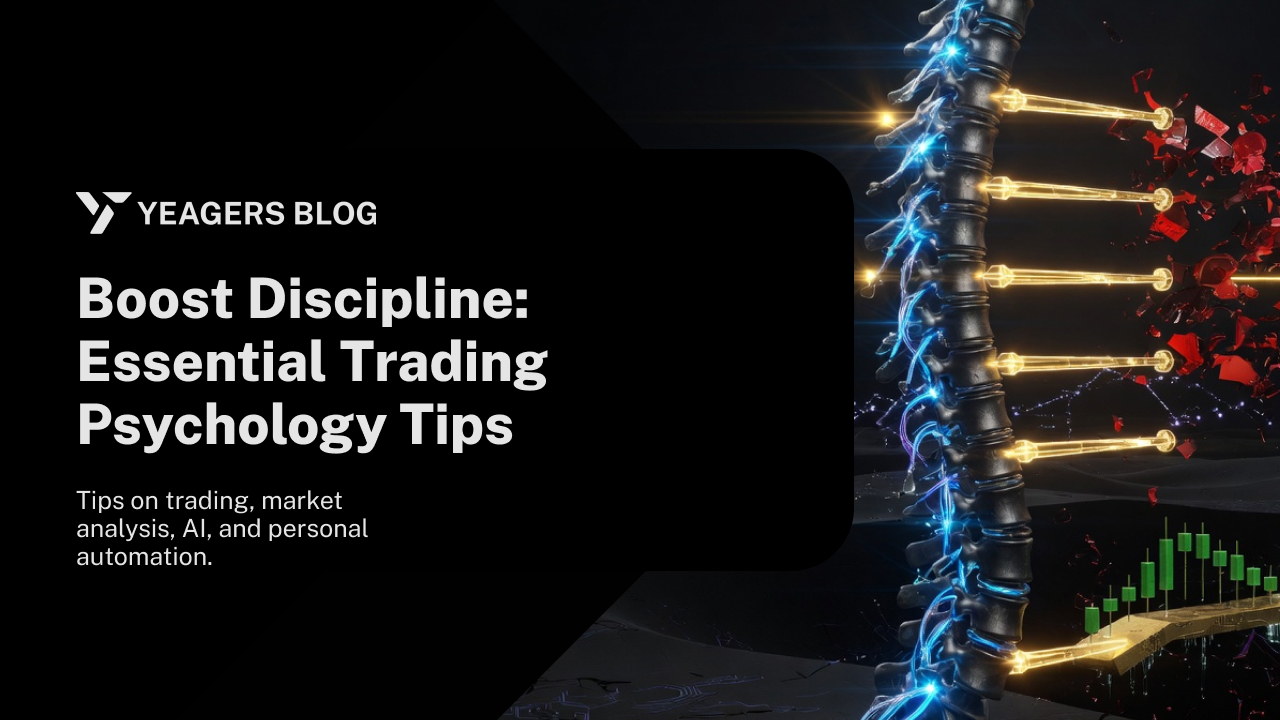
"In the realm of financial markets, consistent profitability isn't solely a function of analytical prowess or sophisticated strategies; it is, more profoundly, a reflection of unwavering discipline and astute emotional control. As Mark Douglas eloquently stated, 'The markets are nothing more than a reflection of human behavior, and if you can understand human behavior, you can understand the markets.' Mastering your inner game is the ultimate edge."
1. Introduction
Trading in financial markets is often perceived as a game of charts, indicators, and algorithms. While technical and fundamental analysis are undeniably crucial, they represent only half of the equation. The other, often underestimated, half is psychological. How a trader manages their emotions, impulses, and cognitive biases can be the difference between consistent success and chronic struggle. Developing robust discipline is not an inherent trait but a skill, meticulously honed through self-awareness and deliberate practice. This comprehensive guide will delve into essential trading psychology tips designed to fortify your mental game, foster discipline, and ultimately pave the way for more consistent and profitable trading outcomes.
2. Understanding The Psychological Landscape Of Trading
Before we can cultivate discipline, it's vital to understand the psychological forces at play when money is on the line. Trading is a high-stakes environment that can amplify human emotions and exploit cognitive shortcuts.
The Dual Nature Of Emotion
Emotions are powerful motivators, but in trading, unchecked emotions can be detrimental.
- Fear: This often manifests as hesitation to enter a promising trade, cutting profitable trades too early, or panic-selling during market corrections. It's a natural protective mechanism, but it can paralyze decision-making when logic is required.
- Greed: Conversely, greed can lead to overtrading, taking excessively large positions, holding onto losing trades hoping for a reversal, or refusing to take profits, expecting bigger gains. It blinds traders to risk and can lead to significant losses.
- Hope: While a positive human trait, hope in trading often translates to holding onto a losing position in the baseless expectation that it will turn around, rather than cutting losses rationally.
- Excitement/Euphoria: After a string of wins, euphoria can lead to overconfidence, prompting traders to abandon their strategy, take on more risk, or increase position sizes without proper analysis.
The Power Of Cognitive Biases
Our brains are wired with shortcuts that, while efficient in daily life, can be disastrous in trading.
- Confirmation Bias: The tendency to seek out and interpret information that confirms one's existing beliefs or hypotheses. A trader might only look for news supporting their long position, ignoring bearish signals.
- Anchoring Bias: Over-reliance on the first piece of information encountered (the "anchor") when making decisions. For example, fixating on a past peak price as a future target, irrespective of current market conditions.
- Availability Heuristic: Overestimating the likelihood of events that are easily recalled or vivid in memory, such as a recent spectacular win or loss, influencing future decisions disproportionately.
- Loss Aversion: The psychological tendency to prefer avoiding losses over acquiring equivalent gains. This often leads to holding onto losing trades for too long and cutting winning trades too short.
3. Core Principles For Cultivating Trading Discipline
Discipline is built upon a foundation of structured thinking and consistent practice. Adhering to these core principles will significantly enhance your mental fortitude.
Develop A Robust Trading Plan
- Clarity: A well-defined trading plan is your blueprint. It outlines your strategy, entry and exit criteria, risk parameters, preferred markets, and even the timeframes you trade. It removes ambiguity and reduces emotional decision-making.
- Specificity: Include details like stop-loss levels, profit targets, position sizing rules, and conditions under which you will not trade (e.g., during major news events).
Practice Risk Management Religiously
- Capital Preservation: This is paramount. Never risk more than a small percentage (e.g., 1-2%) of your total trading capital on any single trade. This ensures that no single loss can severely impair your account.
- Position Sizing: Your position size should always be determined by your stop-loss and your risk percentage, not by how confident you feel about a trade.
- Stop-Loss Orders: Always place a stop-loss order. It’s your safety net, preventing small losses from escalating into catastrophic ones.
Maintain A Trading Journal
- Learning Tool: A detailed trading journal is perhaps the most effective tool for self-assessment. Record every trade – entry, exit, reasons for the trade, emotions felt, and lessons learned.
- Pattern Recognition: Reviewing your journal allows you to identify recurring patterns in your behavior, both positive and negative, helping you to refine your strategy and improve your emotional control.
Embrace Patience And Persistence
- Waiting For Setups: Discipline means waiting patiently for high-probability setups that align with your trading plan, rather than forcing trades out of boredom or impatience.
- Long-Term View: Trading success is a marathon, not a sprint. Persistence through inevitable drawdowns and learning from mistakes are hallmarks of a disciplined trader.
Detach From Outcomes
- Focus On Process: Shift your focus from individual trade outcomes (win or loss) to the quality of your decision-making process. If you followed your plan, then it was a good trade, regardless of the result.
- Probabilistic Thinking: Understand that trading is a game of probabilities. Not every trade will be a winner, but over a series of trades, a positive expectancy strategy will yield profits.
4. Practical Strategies To Enhance Your Discipline
Beyond the core principles, several practical strategies can help reinforce your trading discipline daily.
Set Realistic Expectations
- Avoid Grandeur: Trading is not a get-rich-quick scheme. Understand that consistent, modest gains compound over time. Unrealistic profit expectations fuel greed and lead to reckless behavior.
- Acknowledge Volatility: Accept that losses are an inevitable part of trading. They are simply the cost of doing business.
Take Regular Breaks
- Prevent Burnout: Staring at screens for extended periods can lead to mental fatigue, poor decision-making, and emotional burnout. Step away from the markets, clear your head, and return refreshed.
- Emotional Reset: Breaks provide an opportunity to reset emotionally, especially after a winning or losing streak.
Review And Adapt
- Post-Market Analysis: Regularly review your trading performance, not just individual trades. Analyze your overall statistics, identify weaknesses in your strategy or execution, and adapt.
- Flexibility: While discipline means sticking to your plan, it doesn't mean rigidity. The market evolves, and your plan should too, based on informed analysis, not emotional whims.
Seek Mentorship Or Community
- External Perspective: A mentor or a supportive trading community can provide valuable insights, offer different perspectives, and help hold you accountable to your discipline.
- Shared Experience: Learning from others' psychological struggles and successes can accelerate your own growth.
5. Overcoming Common Psychological Pitfalls
Understanding and actively working to overcome these common pitfalls is a crucial step towards true trading discipline.
Combatting Fear And Greed
- Mindfulness: Practice mindfulness to become aware of these emotions as they arise. Recognize them, but don't let them dictate your actions.
- Pre-Defined Rules: Strict adherence to your trading plan and risk management rules acts as a buffer against emotional impulses. When fear or greed takes hold, refer back to your plan.
Dealing With Overtrading
- Trade Quality Over Quantity: Focus on finding high-quality setups that meet your precise criteria, rather than trading for the sake of trading.
- Daily/Weekly Limits: Consider setting a limit on the number of trades you'll take per day or week, or a maximum daily loss limit that, once hit, means you stop trading for the day.
Managing Losses Effectively
- Acceptance: Understand that losses are part of the game. A professional trader accepts losses quickly and moves on, rather than letting them fester.
- Cut Losses Quickly: Use your stop-loss and never allow a small loss to turn into a large one by hoping for a reversal. "The first loss is the best loss."
6. Conclusion
Discipline is the bedrock of consistent success in trading. It's not about being emotionless, but about managing your emotions effectively, adhering to a well-defined plan, and continuously learning from your experiences. By understanding the psychological forces at play, implementing core principles like a robust trading plan and strict risk management, and actively practicing strategies to enhance your mental game, you can cultivate the discipline needed to navigate the volatile markets. Remember, the journey to becoming a disciplined trader is ongoing, requiring self-awareness, patience, and unwavering commitment. Master your psychology, and you will unlock your true potential in the trading arena.
Keep reading