Real or Fake? Unpacking the AI Agents Trading Myth
"The true power of artificial intelligence in financial markets isn't about fully autonomous agents replacing human traders, but augmenting human capabilities. It's leveraging AI's analytical prowess to process vast datasets and identify subtle patterns, empowering smarter, more informed decision-making for experts." — According to Deloitte
1. Introduction
In the rapidly evolving world of fintech, few topics spark as much intrigue and speculation as the concept of AI agents autonomously navigating the treacherous waters of financial markets. Whispers abound of self-sufficient algorithms that can predict market movements with uncanny accuracy, execute trades at lightning speed, and generate colossal profits without human intervention. But how much of this narrative is grounded in reality, and how much is merely the stuff of science fiction and marketing hype? This blog post aims to dissect the pervasive "AI agents trading" myth, separating the facts from the fiction and providing a clear, comprehensive understanding of where artificial intelligence truly stands in the complex realm of high-frequency trading and investment strategy. We will explore the genuine capabilities of AI in finance, its current limitations, and the indispensable role that human expertise continues to play.
2. What are AI Agents in Trading?
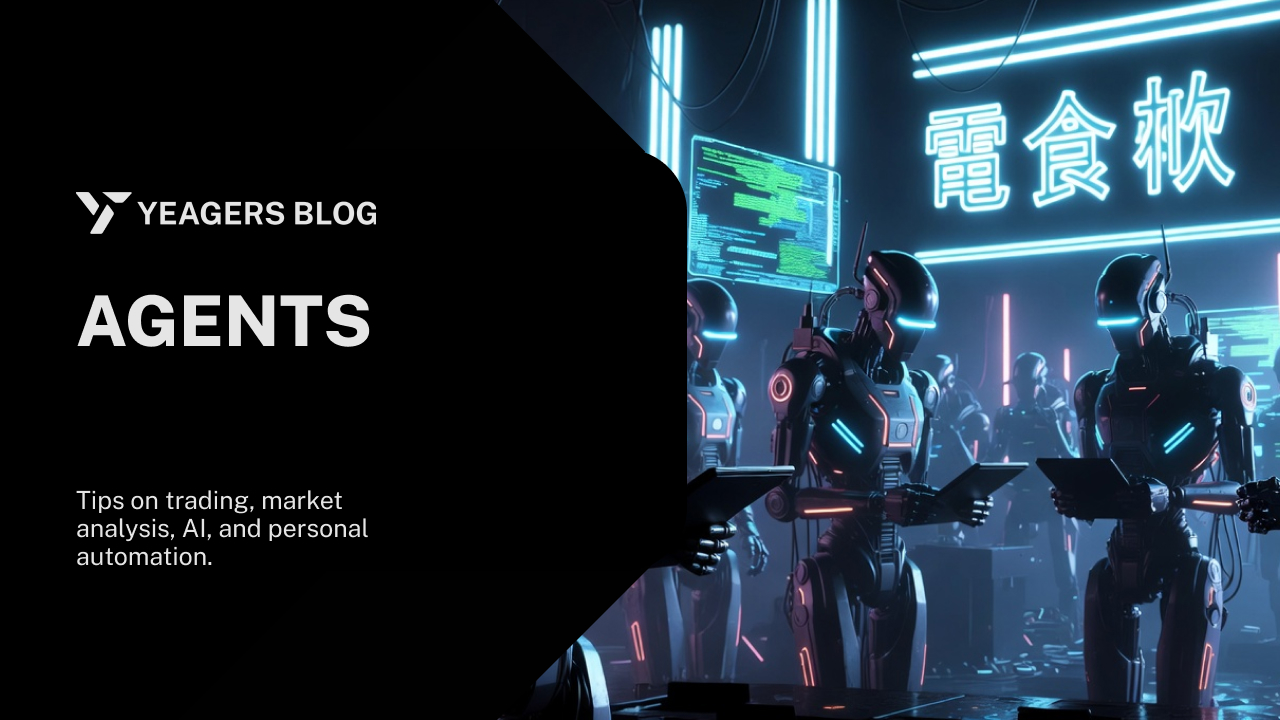
To properly unpack the myth, we first need to define what we mean by "AI agents" in the context of trading. Generally, an AI agent is a piece of software designed to perceive its environment through sensors (data inputs), process that information, and act upon it through effectors (trading decisions and executions) to achieve a specific goal, often optimization. In trading, this goal is typically profit maximization or risk minimization.
Unlike traditional algorithmic trading systems, which follow predefined rules and logic (e.g., "buy when stock A crosses moving average B"), AI agents leverage advanced machine learning, deep learning, and reinforcement learning techniques. These sophisticated algorithms can:
- Learn from data: They don't just execute rules; they can discover patterns, correlations, and causal relationships within massive datasets that would be impossible for humans to discern.
- Adapt to changing conditions: Their models can be continuously updated and retrained based on new market information, allowing them to adjust strategies in dynamic environments.
- Handle unstructured data: Utilizing natural language processing (NLP), AI agents can analyze news sentiment, social media trends, and geopolitical events, incorporating qualitative data into their quantitative models.
- Optimize complex objectives: Beyond simple buy/sell signals, they can optimize portfolios, manage risk across multiple assets, and even learn complex market microstructure.
Essentially, these are not just smart programs; they are programs that can learn, evolve, and make decisions with varying degrees of autonomy, making them appear more "intelligent" than their rule-based predecessors.
3. The Myth vs. Reality: Debunking the Hype
The myth often paints a picture of fully autonomous, infallible AI entities operating with complete independence, consistently outsmarting human traders and traditional institutions. This narrative, while exciting, often oversimplifies the challenges and realities of implementing AI in financial markets.
The reality is far more nuanced. While AI has made incredible strides, the vision of a "god-like" AI trader operating entirely unsupervised remains largely a futuristic aspiration rather than a present-day reality. Current AI applications in trading are powerful tools that augment human decision-making, rather than completely replacing it. They excel at:
- Data processing and pattern recognition: Sifting through petabytes of historical and real-time data to identify subtle trends.
- High-frequency execution: Executing trades within microseconds, exploiting fleeting arbitrage opportunities.
- Risk assessment: Quantifying and managing complex portfolio risks.
However, they currently fall short in areas requiring:
- Intuition and judgment: Understanding the subjective "why" behind market movements, like geopolitical shocks or irrational exuberance.
- Adaptability to unprecedented events: AI models are trained on historical data; black swan events or completely novel market conditions can break them.
- Ethical considerations and regulatory compliance: Navigating the complex legal and ethical landscape of finance still requires human oversight.
The "AI agents trading myth" often conflates sophisticated algorithmic trading with truly sentient, autonomous AI. While many high-frequency trading firms utilize advanced algorithms, these are typically under strict human supervision, with built-in kill switches and human strategists constantly monitoring performance and market impact.
4. The Building Blocks of "Intelligent" Trading Systems
While fully autonomous, omniscient AI agents may be a myth, the underlying technologies that contribute to their theoretical development are very real and actively employed in finance.
Algorithmic Trading: The Foundation
Algorithmic trading has been a staple of financial markets for decades. It involves using computer programs to execute trades at speeds and volumes impossible for human traders. While not "AI" in the modern sense, it forms the infrastructural backbone upon which more intelligent systems are built. Modern algos can be extremely complex, dealing with order routing, execution optimization, and market making.
Machine Learning for Predictive Analysis
Machine learning (ML) is at the core of advanced trading systems. It allows computers to learn from data without being explicitly programmed. In finance, ML models are used for:
- Price prediction: Forecasting future asset prices based on historical data, technical indicators, and fundamental analysis.
- Anomaly detection: Identifying unusual trading patterns that might indicate fraud or emerging market dislocations.
- Portfolio optimization: Constructing portfolios that maximize returns for a given level of risk.
- Credit scoring: Assessing the creditworthiness of individuals and corporations with greater accuracy.
Natural Language Processing for Sentiment
Natural Language Processing (NLP) enables AI systems to understand, interpret, and generate human language. In trading, NLP is invaluable for:
- Sentiment analysis: Scanning news articles, social media feeds, analyst reports, and earnings call transcripts to gauge market sentiment towards specific stocks or the overall economy. Positive sentiment might trigger buy signals, while negative sentiment could suggest selling.
- Event detection: Identifying specific events (e.g., mergers, product launches, regulatory changes) from unstructured text that could impact asset prices.
Reinforcement Learning: The Future Frontier
Reinforcement Learning (RL) is perhaps the closest technology to the "autonomous agent" ideal. RL algorithms learn by interacting with an environment, receiving rewards for desirable actions and penalties for undesirable ones, much like how one trains a dog. In trading, an RL agent could learn optimal trading strategies by simulating market interactions, constantly refining its approach to maximize cumulative reward (profit) over time. While highly promising, particularly for dynamic, complex environments, RL is still largely in its research and experimental phases for live trading, primarily due to the vast amount of data and computational power required, and the difficulty in safely transferring simulated strategies to real-world markets.
5. Challenges and Considerations
The path to fully autonomous AI agents in trading is fraught with significant challenges that underscore why the myth currently outweighs reality.
- Data quality and quantity: AI models are only as good as the data they are trained on. Financial data is vast but can be noisy, incomplete, or biased, leading to flawed models.
- Overfitting and model decay: Models trained on historical data can become "overfitted," performing exceptionally well on past data but failing miserably on new, unseen market conditions. Markets are constantly evolving, requiring continuous model adaptation and robust validation.
- Regulatory landscape and ethical concerns: The financial industry is heavily regulated. Autonomous AI agents introduce complex questions around accountability, market manipulation, and systemic risk. Who is liable when an AI makes a catastrophic error?
- The "black box" problem: Many advanced AI models, especially deep learning networks, operate as "black boxes" – their internal decision-making processes are opaque and difficult for humans to interpret. This lack of interpretability can be a major hurdle in regulated industries where transparency and explainability are crucial.
- System robustness and cybersecurity: Highly autonomous AI systems could become targets for cyberattacks, leading to potentially devastating financial losses or market instability. Ensuring their resilience is paramount.
6. The Human Element: Still Indispensable
Despite the advancements in AI, the human element remains not just relevant but absolutely critical in financial markets. AI should be viewed as a powerful tool that augments human capabilities, rather than a replacement.
- Strategy development: Human traders, strategists, and quants are essential for designing the overall investment strategies, setting the parameters for AI models, and defining their objectives.
- Market intuition and qualitative analysis: Humans possess an innate ability to understand context, political shifts, social trends, and psychological factors that influence markets – factors that AI struggles to fully grasp.
- Risk management and oversight: Human supervision is vital for monitoring AI performance, intervening during unforeseen market events, and implementing "kill switches" to prevent runaway algorithms.
- Crisis management: In times of extreme market volatility or crisis, human judgment, experience, and leadership are indispensable for navigating uncertainty and making decisions that prioritize stability and long-term viability.
- Ethical decision-making and compliance: Ensuring that trading strategies adhere to ethical guidelines and regulatory frameworks requires human oversight.
AI can process, analyze, and execute with unparalleled speed and efficiency, but humans provide the creativity, ethical grounding, intuitive understanding, and strategic foresight necessary to thrive in the complex, ever-changing world of finance.
7. Conclusion
The notion of fully autonomous AI agents trading independently in financial markets, while captivating, remains largely a myth. While artificial intelligence has revolutionized many aspects of finance, from algorithmic trading and predictive analytics to risk management and sentiment analysis, it currently serves primarily as an incredibly powerful set of tools that amplify human intelligence and capabilities.
The reality is a sophisticated collaboration: AI agents excel at data processing, pattern recognition, and high-speed execution, freeing human experts to focus on strategic thinking, qualitative analysis, ethical considerations, and crisis management. The challenges of data quality, model robustness, regulatory compliance, and the inherent unpredictability of human-driven markets ensure that the human element will remain indispensable for the foreseeable future. As AI continues to evolve, the most successful financial endeavors will undoubtedly be those that master the art of synergistic collaboration between cutting-edge artificial intelligence and insightful human expertise. The future of trading isn't about AI agents replacing us, but about AI empowering us to trade smarter, faster, and with greater insight.
Keep reading